How to use singing bowls to teach children mindfulness
Nearly 15 years ago, I had the privilege of attending a retreat with the extraordinary Zen Master Thich Nhat Hanh. Many things stayed with me from that experience. But one practice settled into my teaching in a way I never quite expected: inviting the bell to sing.
It’s a deceptively simple practice. And yet, after teaching adults to share meditation with children over many years — in classrooms, in family settings, with children on the autistic spectrum — I’ve seen it create a quality of stillness that longer, more complex techniques sometimes can’t reach.
Here’s how you can bring it into your own practice with children.
What Is “Inviting the Bell”?
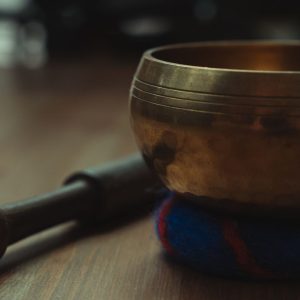 In Thich Nhat Hanh’s *tradition, we never strike a singing bowl or bell — we invite it to sing. That distinction matters, especially with children. It immediately reframes the action: this is not about force or noise. It’s about mindful presence, care, and intention.
You can use the practice as the opening to a longer meditation session, or as a complete short practice in its own right. Either way, it teaches breath awareness, focused attention, and the idea that peace lives inside us as well as outside.
Watch Thich Nhat Hanh introduce this practice himself in this short teaching video: 🔗 Inviting the Bell – Thich Nhat Hanh (YouTube)
The Bell Master
If you’re working with a group of children, the role of bell master builds responsibility, self-regulation, and a sense of honour. The child chosen as bell master for that session is the one who will invite the bell to sing.
Choose the bell master in whatever way feels meaningful for your group — perhaps recognising a child’s kindness that day, their progress, or simply taking turns. What matters is that the child holds the role with mindful care.
Step-by-Step: How to Invite the Bell to Sing
1. Setting up — The singing bowl rests in front of the bell master. Before touching it, the child pauses and focuses on their breath.
2. *Namaste — They bring their palms together at the centre of their chest and gently bow to the bowl. In doing this, they acknowledge the peaceful energy within the bell, and the peaceful energy within themselves.
3. Lifting the bowl — With both hands, they lift the bowl gently. One hand becomes a cradle — fingers stretched wide and soft, like the petals of a flower in full bloom.
4. The bell inviter — With the other hand, they carefully lift the mallet — the bell inviter. We never use the word “hit” here. It’s an invitation to sing. Children understand this immediately, and it changes the quality of everything that follows.
5. The breath poem — Before sounding the bowl, the bell master can recite this quietly — silently or aloud, with your support:
As I breathe in, I notice this beautiful bell
As I breathe out, I open my heart to the bell
As I breathe in, I let my breath touch my heart
As I breathe out, I ask the bell to sing and touch the hearts of others with peace
6. Waking and inviting — First, the mallet touches the bowl very gently — just awakening it. Then, with a little more intention, the bell sings.
7. Breathing with the sound — Everyone listens, eyes open or closed. Guide the children to follow the sound outward into the world, carrying peace with it — or inward, feeling its vibration settle inside them. As a focusing technique, ask children to raise their hand quietly when they can no longer hear the sound. This supports concentration without turning it into an effort.
The bell is usually invited to sing three times, though you can adapt this to your child’s needs.
The Gatha
This is the traditional verse from Thich Nhat Hanh’s tradition:
With body, speech and mind in perfect oneness I send my heart along with the sound of the bell. May all who hear it awaken from forgetfulness And transcend all anxiety and sorrow.
For older children or teenagers, sharing the gatha directly connects the practice meaningfully to its *roots.
Everyday Mindfulness Bells
A singing bowl is a wonderful tool, but it isn’t the only one we can use to create a mindful moment. Once children grasp the principle — that any sound can be an invitation to pause, breathe, and return to the present moment — the whole world fills with ‘bells’.
Consider these everyday alternatives:
- The school bell, before everyone moves
- A bird call heard through a window
- A phone notification turned into an intentional pause
- A timer set to ring softly mid-afternoon
Any of these becomes a mindfulness bell when you hold it with that spirit of invitation.
What Does the Research Say?
The use of singing bowls for wellbeing is no longer just an ancient tradition — science is beginning to catch up.
Studies now show that singing bowl sound meditation produces measurable physiological and psychological changes. Specifically, researchers have found it reduces negative affect, increases positive affect, and improves blood pressure, heart rate, and respiratory rate (ScienceDirect). Furthermore, a 2016 study from the University of California San Diego, published in the Journal of Evidence-Based Complementary and Alternative Medicine, found that an hour-long sound meditation helped participants reduce tension, anger, fatigue, anxiety, and depression — while also increasing spiritual wellbeing ( Psychology Today).
The brain and the bowl
A neurophysiological study found that singing bowl sound massage shifts the brain toward a more mindful, meditative state of consciousness — and that participants experienced it as beneficial for overall wellbeing ( NIH/PMC). Additionally, researchers describe this as vibroacoustic healing: gentle sound frequencies and physical vibrations interact with the body’s own rhythms, slowing the breath and calming the nervous system. Importantly, none of the studies reviewed reported negative side effects.
Perhaps most relevant for those of us working with children, a 2025 systematic review concluded that singing bowls show potential to alleviate anxiety and depression, improve sleep quality and cognitive function, and positively change autistic behaviour ( PubMed).
It’s worth holding this lightly — the research is still growing, and more rigorous studies are needed. However, for those of us who have watched a child’s shoulders drop and their breathing slow the moment a bowl begins to sing, none of this comes as a surprise. In fact, working directly with neurodivergent children, I’ve seen their stress and anxiety shift into something genuinely peaceful — and often the bowl doesn’t even need to be the focus. The sound in the background can be quietly profound.
Singing Bowls and Children on the Autistic Spectrum
In my experience, singing bowls tend to land differently with autistic children than most other mindfulness tools — and the research offers clues as to why.
Researchers are now actively exploring whether singing bowl music enhances attention in children with autism spectrum disorder (🔗 MacEwan University). Moreover, one clinical study found that singing bowl therapy alongside usual care effectively changed autistic behaviour in children with ASD (🔗 ScienceDirect).
Why vibration matters
The vibration is key. Singing bowls deliver sound frequencies directly to the muscles, bones, and nerves, while simultaneously stimulating brainwaves and inducing deep relaxation. For children who are sensitive to sensory input, this quality — predictable, sustained, non-threatening — makes it easier to settle than practices that rely on language or stillness alone.
As always, go gently. Let the child meet the bowl at their own pace, including the choice of whether to hold it themselves.
Useful Resources
If you’d like support bringing practices like this into your family life or classroom, the Connected Kids Method walks you through everything step by step — including how to adapt breath and sound practices for children with different needs.
The Great Bell Chant – Thich Nhat Hanh & Thay Phap Niem (YouTube)
*If you are teaching in a secular setting you can invite the children to place their hands on their heart.