If Meditation Isn’t Working, You’re Not Doing It Wrong
I’ve been teaching meditation for a long time – in fact, for nearly 25 years. And one of the things I feel most strongly about is this: there is no single right way to meditate.
Meditation changes every time you sit with it. What works for you today may not be what you need next month. So when we teach children to meditate, we have to hold that same openness — because children are individuals too. If a child resists meditation or tells us they don’t like it, what they’re usually telling us is that they don’t like this type of meditation. That’s not failure, that’s information.
So we try something else.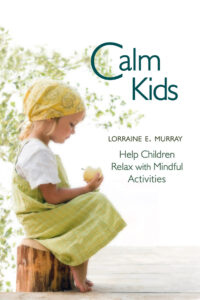
When I wrote my first book, Niños tranquilos, I wanted it to be a starting point — a book that freed adults to trust their own intuition and find the approach that worked for them and for their children. Not a prescription approach, but more of a permission slip. Because when it’s enjoyable for both the adult teaching and the child learning, a powerful connection takes place.
When Someone Challenges You
A while back, I shared a link on our pagina de Facebook about healing mantras for children — sounds and phrases children can use to help them feel calmer. The response was fascinating.
Many people embraced it enthusiastically. But one or two pushed back hard. Using sound mantras in meditation, they argued, reduced its credibility in the eyes of scientists and logical thinkers. It was “out there.” It undermined the case for taking children’s meditation seriously.
I’ll be honest — my first reaction was annoyance.
But then I did what I always do when something provokes a strong reaction in me.
I meditated on it.
And in doing so, I realised the challenge was actually an invitation. To notice the emotion it stirred up. To forgive myself for not responding with compassion to them or myself. And to look for the bigger lesson underneath.
The lesson was this: if people were asking for evidence, I should go and find it. So I did — and I asked our connected kids community to help.
What the Research Actually Shows
Here’s where it gets interesting — and where I’ll be honest with you.
Some of the claims that circulate online about sound and meditation are not well supported by rigorous science. The idea that specific frequencies “repair DNA,” for instance, lacks rigorous scientific backing in controlled clinical trials, and I think it’s important to acknowledge this. Overstating the evidence doesn’t help anyone — and it strenghtens the sceptics argument.
But sound in meditation does have a genuine and growing evidence base — when we look at what the research actually measures.
A systematic review and meta-analysis of mantra-based meditation published in the International Journal of Environmental Research and Public Health found significant reductions in anxiety, depression, stress, and post-traumatic stress across randomised controlled trials.
A randomised controlled study on meditation with preadolescents and adolescents found that meditation practice had a positive impact on wellbeing while reducing anxiety and stress — giving young people a resource to cope with everyday difficulties.
And as I explored in my recent post on singing bowls, a 2025 systematic review found that singing bowl therapy shows potential to reduce anxiety and depression, improve sleep and cognitive function, and positively change autistic behaviour — with no negative side effects reported across the studies reviewed.
Research from the Association of Accredited Naturopathic Medical Colleges describes sound therapy as a compelling intersection of ancient wisdom and modern science — with a growing body of evidence providing an increasingly solid foundation for its use in therapeutic settings.
The science is still growing, and more rigorous studies are always needed. But what was once dismissed as alternative is now supported by a growing body of credible research.
The Bigger Lesson
In every challenge, there is an opportunity to learn and grow. That critic on our pagina de Facebook — who frustrated me so much at the time — pushed me to find better evidence, ask better questions, and be more precise about what I was claiming.
So if you’ve been trying to teach your children meditation and it isn’t working the way you hoped — try what I did.
Sit with it and meditate on the question.
Be mindful of what your children are actually trying to tell you.
They might just be signposting you to the style of meditation they need.
Recursos útiles
If you’d like support bringing practices like this into your family life or classroom, the Connected Kids Method walks you through everything step by step — including how to create mindful practices for children and teens with different needs.
 Lorraine Murray is the founder of Connected Kids — an accredited, award-winning organisation that trains parents, carers, and educators to teach mindfulness and meditation to children. She is the author of 3 books about teaching meditation to young people and has spent 25 years helping adults unlock the right approach for the individual child in front of them. Her work is informed by her experience as a foster carer, a meditation practitioner and teacher of 35 years and teacher trained in different professional healing modalities.