A Toddler Meditation ‘Game’ with Big Benefits
Mindful meditation for toddlers: initially, people who enquire about our Connected Kids Method for teaching children mindful skills wonder about the age at which children can start learning meditation.
Meditating with toddlers initially seems daunting as we consider they (naturally) have a short attention span.
But introducing young children to mindfulness will have more initial success if we understand this and don’t expect them to be still (or serious).
With a playful approach, it can be fun, engaging, and highly therapeutic. Here’s a simple mindful activity we developed that toddlers can enjoy (or adapt to children with additional needs with short attention spans).
The Therapeutic Power of Playful Mindfulness
Introducing toddlers to mindfulness through a mindful ‘game’ helps them develop focus, self-regulation, and emotional awareness. At this age, these skills aren’t fully developed but they are forming the foundation for emotional resilience later in life. Engaging them in playful meditation, supports:
attention and concentration
early emotional regulation
an outlet for their energy in a safe and structured way
social interaction and imitation skills when in group practice
Teaching toddlers meditation isn’t just about calm—it’s about giving children tools to manage their bodies, energy, and emotions from an early age.
Step 1: Focus – Peek-a-Boo
Invite your child to sit in front of you in a way that’s comfortable for them on the floor/chair with feet touching ground.
Now, hold a piece of paper (or lightweight fabric) in front of your face, with only your eyes peeking above it.
Hide behind the paper, then peek and say, “Boo!” Repeat by peeking from the side, under, and around the paper.
Why it works: Eye movement is an integral development in children that supports healthy brain development. The playful element of this practice engages their *sacral chakra, and their posture helps them support the *root energy centre, helping children feel grounded. It’s a practice that also supports their social interaction skills and strengthens attention and the ability to focus on a single object or action—a vital foundation for later meditation practice.
Step 2: Hand Peek
Place the paper down and hold your hands in front of your face, palms out, to hide yourself. Repeat the “Boo” exercise.
Invite your child to copy you, peeking from behind their hands and saying “Boo!”
As children take the lead in choosing how to peek, they begin practising decision-making and agency, which boosts confidence and emotional balance. This practice may also make them (and you) giggle. This can become part of the mindful practise – feeling the ‘giggle’ in the body, hearing the sound of it which helps children notice body sensations (important for later development to detect stress indicators or for self regulation skills). Plus giggling releases feel good chemicals into the bloodstream which are natural painkillers and boost mood.
Step 3: “Shhhh” Sound Awareness
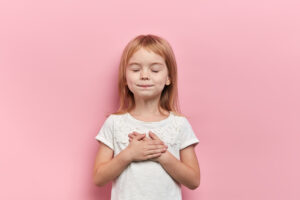 Ask your child to bring their palms onto their chest —this connects them to their *heart centre.
Encourage them to make a “Shhhh” sound, gradually louder and then softer. Repeat several times.
After the softest “Shhhh,” invite them to sit in silence for a few moments (2 breaths), noticing the stillness.
Next, ask them to make the sound and feel it vibrating through their body, louder and softer again.
Therapeutic benefits: This exercise strengthens the *throat chakra, improving communication and self-expression, and also connects to the *heart centre. Children also learn to regulate their breath and connect to their body senses which increases self-awareness.
Step 4: Exploring Other Sounds
You can repeat Step 3 with different sounds, such as “Ahhhh” or “Mmmmm.” You might let a child choose a sound for the group.
This playful sound practice:
Encourages emotional release – if the child has been unhappy or sad/angry, making the sound and attaching it to the breath/sound can help them release it. This works energetically through the *throat chakra.
- Helps children feel more centred, calm, and in learning to engage in control of their voice.
The ‘mmmm’ sound activates the vagus nerve which has a powerful influence on the parasympathetic nervous system (rest and digest). The ‘ahhhh’ sound activates the *heart chakra which is key energy centre calming the nervous system and supporting emotional wellbeing.
Why Play is Important in Mindful Meditation for Toddlers
Toddlers may struggle to be still, but this type of playful meditation lays the foundation for lifelong emotional resilience. By introducing mindfulness early, children learn to:
Focus and concentrate
Self-regulate their emotions
Express themselves safely
Connect with their own energy and the world around them
It’s not just meditation—it’s an early energy practice that balances their *chakras and promotes overall wellbeing.
We hope this short practice demonstrates one aspect of the Connected Kids Method – helping adults become more creative teaching meditation and integrating mindful moments into playful/daily activities.
*Chakras are energy centres in the body – from Eastern philosophies and practices dating 3000 to 4000 years ago. They link the physical, emotional, mental and spiritual aspects of a human being and are influenced by life experiences. Read more aquí.
This article was written by Lorraine Murray – author of Niños conectados and founder of the Connected Kids Method of teaching meditation to neurodivergent children.
Mindful Meditation for Toddlers: further resources
Niños tranquilos by Lorraine E Murray
- Mindful Activities Collection